Add Row
Add Element
cropper
update
Living Well in DFW
update
Add Element
  • Home
  • Categories
    • Health and wellness
    • lifestyle
    • community
    • resources
    • tips
    • DFW
    • nutrition and fitness
    • connections
    • Home Base
    • Tech News and Tips
    • Featured
March 29.2025
3 Minutes Read

Protect Your Ride: Discover the Best Bike Locks of 2025

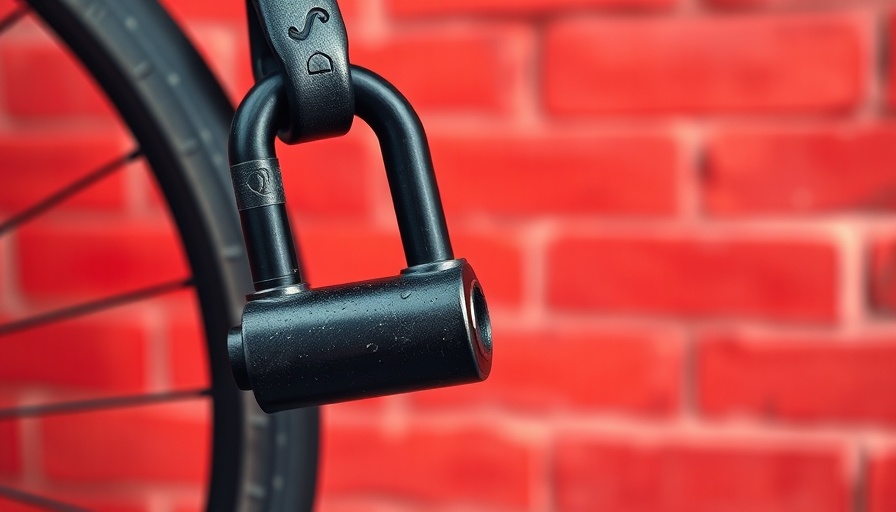
Modern black bike lock against a red brick wall for best bike locks 2025.

The Increasing Threat of Bike Theft

Biking is a freedom many cherish, but it comes with its risks. Among the most pressing is bike theft, an issue that permeates urban areas and suburban neighborhoods alike. Recent advancements in bike lock technology aim to combat these rising threats. Bike theft is not just a matter of losing a beloved mode of transportation but is a significant concern that can impact a rider's day-to-day life.

Innovation in Bike Lock Technology

As bike theft continues to climb, manufacturers are finding innovative ways to enhance security measures. Locks once deemed effective are now falling short against tools like battery-powered angle grinders. This has spurred an 'arms race' in the bike locking industry. For instance, locks such as the Litelok X1 and Abus Bordo Granit 6500K have been engineered to withstand these modern threats. These locks blend advanced materials with design ingenuity, providing cyclists peace of mind without sacrificing portability.

Top Picks for Bike Locks: A Summary

In a recent comparison, several locks stood out in terms of security, versatility, and price:

  • Litelok X1 - Best High-Security Bike Lock, available for $180. Known for its innovative design and high-strength materials, it offers an impressive defense against tools.
  • Abus Bordo Granit 6500K - Best Folding Lock for Security at $120. This lock combines portability with rugged security, making it versatile for various biking scenarios.
  • TiGr Blue Mini - Best Lightweight U-Lock at $100, ideal for riders who demand a balance between ease of use and effective protection.
  • Seatylock Foldylock Compact - Priced at $90, this ultra-compact bike lock is perfect for those who want to travel light while keeping their bikes secure.

Understanding Security Ratings

When investing in a bike lock, it's crucial to understand various security ratings. Several ratings, such as Sold Secure and ART, determine the relative strength of locks based on testing scenarios that mimic real-world attacks. Leveraging these ratings allows consumers to make informed choices. For example, a lock that boasts a high Sold Secure rating has undergone rigorous testing to resist cutting and picking attempts, ensuring that the investment is worth the peace of mind it provides.

Best Practices for Using Your Bike Lock

Having a quality lock is essential, but using it effectively is just as important. Here are some tips to maximize security:

  • Always lock your bike to a fixed, immovable object.
  • Utilize two different lock types for added security, such as a U-lock combined with a chain lock.
  • Lock your bike in well-lit, busy areas whenever possible.

By adhering to these best practices, cyclists can significantly boost the chances of their bike remaining safe.

Looking Ahead: The Future of Bike Security

As technology continues to evolve, so too will bike locks. Future innovations may include locks that integrate with smart technology, offering alerts via smartphones when tampering is detected, or GPS features that help locate stolen bikes. With each stride in technology, the battle against bike theft is likely to intensify, empowering cyclists to ride with confidence.

Whether you're a casual rider or an avid cyclist, understanding the available bike locks and implementing best practices can ensure your ride remains safe and sound. Consider upgrading your locking mechanism today to stay one step ahead of potential theft.

Tech News and Tips

3 Views

0 Comments

Write A Comment

*
*
Related Posts All Posts
12.08.2025

Navigating the Best Printers for Home and Office in 2025

Update The Essentials of Home and Office Printing In a world where digital communication dominates, the need for printers remains pronounced, particularly among individuals managing home offices or those with specific printing needs. While many homes have done away with printers altogether, the reality is that situations still arise where physical prints are necessary, from product labels to essential documents. Understanding the types of printers available can help you choose the right model for your usage patterns. Ink vs. Laser: Which Printer Is Right for You? Before diving into the specifics, the first decision when buying a printer is to choose between inkjet and laser technology. Inkjet printers are versatile and are typically favored for their ability to print in color, whereas laser printers are known for their speed and efficiency with text-based documents. For frequent color printing, a high-quality inkjet might be ideal. However, for those aiming for cost efficiency and who print primarily in black and white, laser printers shine. Evaluating the Best Printer Options Here’s a selection of top-performing printers currently acclaimed for home and office use. They have been selected based on their performance, features, and user feedback: Brother HL-L2460DW: A monochrome laser printer excellent for casual users who need reliability and affordability. It offers fast print speeds and compatibility across multiple devices. HP OfficeJet Pro 9125e: This all-in-one inkjet printer excels in homes with school-age children, providing high-quality prints and scanning capabilities alongside a user-friendly experience. Brother MFC-L3780CDW: Best suited for small businesses, this color laser printer provides excellent print quality and durability but comes at a higher upfront cost. Epson SureColor P700: Ideal for photography enthusiasts, this printer delivers stunning quality for photos and long-lasting pigment inks. Changing Printing Needs: The Move Towards Eco-Friendly Options Printing technology is also adapting to environmental considerations, with the emergence of ink tank systems that contribute to less waste due to their refillable nature. Choosing these options not only proves cost-effective but allows consumers to participate in eco-conscious consumption. Where to Buy and What to Look For When purchasing a printer, look for those with a solid warranty and user-friendly features, such as wireless connectivity and easy setup. Retailers like Amazon, Walmart, and Best Buy often have competitive pricing and customer reviews that help inform choices. Be wary of potential hidden costs associated with ink or toner subscriptions, and consider how often you will print to determine the best fit for your needs. Conclusion: Making Your Choice In the end, printers remain valuable assets in both home and office settings. The key lies in delineating your specific printing needs and weighing them against the options available, from user-friendliness and cost efficiency to print quality and environmental impact. Once you identify what works best for your situation, you'll find a printer that aligns with both your practical and ecological considerations. As you navigate your printer options, consider your unique requirements carefully and explore various options to find one that best serves your home or office printing needs.

12.07.2025

Discover How the V-JEPA Model Empowers AI with Physical Intuition

Update The Emergence of AI with Physical Intuition Recent advancements in artificial intelligence (AI) have led to the creation of models that can intuitively understand the physical world, mimicking a capability once thought unique to humans. One such innovative system is the Video Joint Embedding Predictive Architecture, known as V-JEPA, developed by Meta. This AI exhibits an almost childlike ability to learn from video inputs, recognizing and reacting to concepts such as object permanence and gravity. Understanding V-JEPA: The Architecture Behind Learning V-JEPA defines a new frontier in AI by utilizing ordinary video footage to gain an understanding of the complexities of our environment. Traditional AI systems often struggle with excessive details, analyzing videos in what’s termed 'pixel space.' This means every single pixel is deemed equally important, leading to inefficiencies. V-JEPA, however, sidesteps this limitation by creating high-level abstractions or "latent representations." This allows the model to focus on essential information, discarding noise that might hinder its performance. The Importance of Surprise and Learning Critically, V-JEPA incorporates a notion of "surprise"—a reaction similar to what babies display when their expectations about the physical world are upended. For example, if a ball disappears behind an object and fails to reemerge, the model accurately registers this as an unexpected outcome. This capability not only demonstrates the model's advanced understanding but also aligns with fundamental theories in cognitive science about how both humans and machines learn. As Micha Heilbron, a cognitive scientist, notes, this aspect proves that intuitive physics can be learned purely through observation, reflecting a significant milestone in AI development. Implications for Robotics and Future Technology The implications of V-JEPA extend into exciting territory, particularly in robotics. The model can be fine-tuned for specific tasks, transforming it into an invaluable tool for robots that need to navigate and interact with the physical world. This adaptability paves the way for future innovations where AI systems not only perceive but also effectively respond to real-world challenges. Challenges and Future Directions Despite its groundbreaking advancements, V-JEPA is not without limitations. Experts like Karl Friston have pointed out that while V-JEPA showcases promising capabilities, it currently lacks a mechanism to encode uncertainty. This aspect is vital for an AI system that aims to operate in unpredictable and dynamic environments. Future iterations, like the recently launched V-JEPA 2, will need to address these gaps effectively to enhance AI's role in robotics and other applications. As technology continues to evolve, keeping a pulse on developments like V-JEPA is essential. It represents a significant leap toward machines that can achieve a nuanced understanding of our world instead of merely processing data. By bridging the gap between perception and action, systems like V-JEPA could redefine what is possible in AI, opening doors to numerous applications that were once relegated to the realms of science fiction.

12.06.2025

Uncovering Technological Shifts: DOGE's Impact, Amazon's AI Advances, and Facebook Dating's Success

Update Is DOGE Still Thriving in the Federal Government? Recent discussions have brought the term DOGE back into public discourse, particularly regarding its presence within federal agencies. While many reports have claimed that the so-called 'Department of Government Efficiency' has fizzled out, insights reveal that many DOGE operatives remain entrenched within various government sectors, continuing their work One clear voice in this narrative comes from insiders who assert that despite appearances, DOGE's ethos—focused on cutting waste and improving efficiency—persists robustly in federal operations. The group, initially associated with high-profile initiatives under the Trump administration, continues to impact policymaking, especially by pushing for the tech company-like operational practices. Amazon's Rise in AI: A Game Changer? Meanwhile, Amazon is positioning itself prominently in the AI landscape. As a major player in technology infrastructure, Amazon Web Services (AWS) has become pivotal in facilitating advancements in AI, thereby solidifying its competitive edge over other tech giants. With new models such as Nova Light and Nova Pro launched this week, Amazon is proving that its ambitions in artificial intelligence extend well beyond just backing other companies. Leah Feiger, WIRED’s senior editor, emphasizes that the company aims to deliver real value to customers through these AI advancements, contrasting it with the more ambitious yet often unrealistic pursuits seen at its competitors. This pragmatic approach could lead Amazon to dominate the AI race, especially as it continues developing specialized models for different use cases. Facebook Dating: An Unexpected Success In addition to AI and government insights, Facebook Dating is gaining traction, warranting attention on why it is becoming more popular. Unlike other platforms struggling to find their footing, Facebook Dating has harnessed its existing user base to draw in participants seeking meaningful connections. The service’s integration within the broader Facebook ecosystem lends it credibility, appealing to users who might not want to step outside their familiar environment. As dating apps proliferate, Facebook Dating's growing usage indicates a shift in user behavior, possibly highlighting a desire for a less transactional approach to finding love online. It’s an intriguing topic that stands in stark contrast to the experiences users have with dedicated dating platforms like Tinder and Bumble. The Human Element: Why Understanding These Changes Matters For anyone engaged in the technological or social landscape, these developments point towards a broader narrative about efficiency, connection, and user experience in our increasingly digital lives. Recognizing the nuances of how entities like DOGE, Amazon, and Facebook navigate their roles can help individuals understand the larger forces at work in technology and society. By engaging with and analyzing these stories, we empower ourselves to make informed decisions in a world where technological innovation meets deeply human needs. Being aware of these trends allows us to adapt and thrive, whether in our professional fields or personal pursuits.

Terms of Service

Privacy Policy

Core Modal Title

Sorry, no results found

You Might Find These Articles Interesting

T
Please Check Your Email
We Will Be Following Up Shortly
*
*
*